


The Ultimate Beginner’s Guide to Surfing in Uluwatu
Surf breaks in Uluwatu are known for their powerful breaks, reef bottom and barrels. Uluwatu’s world-class surf breaks have attracted world tour surfers, professional surfers and free surfers all across the world. You’ve seen the videos. Barreling waves, surfers flying out of turquoise tubes. It’s a bucket-list destination that attracts best of the best.
But if you’re just starting out your surfing journey, now you’re wondering if you can actually surf here as a beginner? With its popularity amongst advanced surfers, are the breaks in Uluwatu suitable for beginners? Or is it just overhyped?
Our honest truth:
Uluwatu itself? No — it’s an advanced reef break, heavy, strong current and unforgiving.
The broader Uluwatu area? Yes — the Bukit Peninsula has some of the best beginner-friendly waves in Bali, with the right guidance and if you know exactly where to look.
1. Beginner-Friendly Surf Breaks in Uluwatu
What makes a surf spot beginner-friendly?
- White wash: Broken waves that provide a steady push without the “drop” of a green wave.
- Mellow green wave: For those looking to progress, mellow green wave that allows you to practice pop-up and take off while going down the line.
- The Channel: A “safe zone” where waves don’t break, allowing you to paddle out or rest without battling the waves.
- Soft Bottom (Ideal): While most of Uluwatu is reef, beginner spots have deeper water over the reef or sandy patches.
- Multiple take-off Zones: This spreads out the crowd so you aren’t fighting for the same wave.
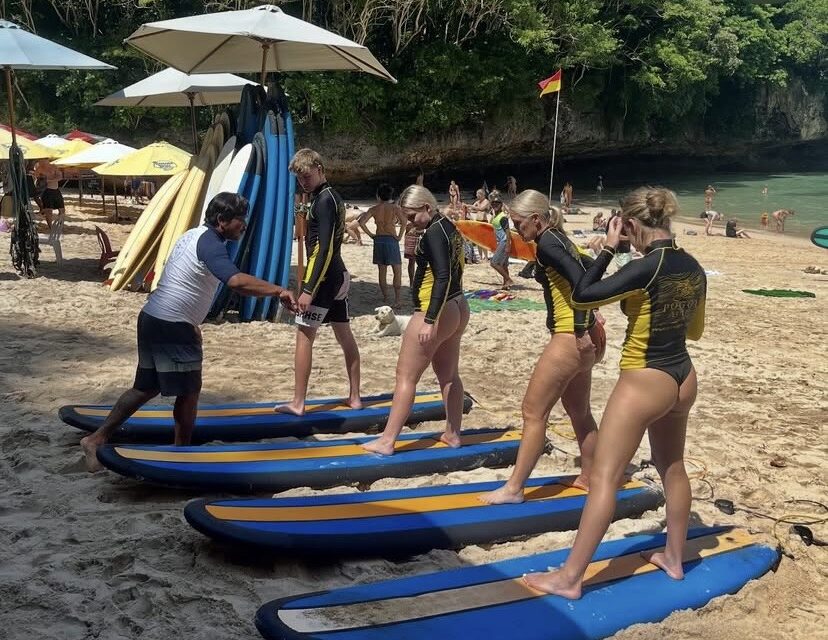
Here are some of the surf spots in Bukit Peninsula, Uluwatu Area that we would recommend as a beginner:
| Baby Padang-Padang 🌊 Reef Break 🏄 Right-hander | This break offers a rolling right-hander that gives you plenty of time to find your balance. The Easy Paddle: One of the best features of Baby Padang is the clear channel. This is a deep-water zone where waves don’t break, allowing you to paddle back to the lineup without “duck-diving” or battling incoming sets. At Poggy Bali Surf School, we always recommend beginners hit this spot during high tide. Why? High tide creates a deep “water cushion” over the reef. If you fall (and you will!), you’ll land safely in deep water rather than getting too close to the reef floor It’s a social, fun wave where you can meet other new surfers, but it can get crowded. Having a coach by your side helps you navigate the “traffic” and ensures you’re in the right spot to catch the best waves of the set. |
| Dreamland Beach 🌊 Beach Break 🏄 Left & right | True to its name, Dreamland is one of the most beautiful beaches in the Bukit Peninsula. What makes it unique for the area is its sandy bottom, offering a more forgiving landing for those just learning to find their balance. Timing is everything at Dreamland. We recommend surfing here at mid-tide. At high tide, Dreamland is famous for a heavy “shorebreak” (waves breaking right on the sand). This can be powerful and even dangerous for beginners trying to get in or out of the water. Mid-tide keeps things much softer and safer. Closer to shore, beginners can practice “popping up” in the consistent white water. The A-Frame: For advanced beginners and intermediates, the outer peak offers a beautiful “A-frame” (a wave that breaks both left and right), allowing you to practice riding the “green” face of the wave. Caution: Dreamland can have strong shifting currents. Always stay close to your instructor to ensure you don’t drift too far off and get caught by a set wave! |
| Balangan: A long left-hander that works well on smaller swells. 🌊 Reef break 🏄 Left-hander | Balangan is known for its consistent “lefts.” For beginners who have mastered the basics and are looking to practice their “trimming” (riding along the face of the wave), this spot offers some of the longest rides in Bali. Never surf Balangan at low tide as a beginner. At low tide, the reef is incredibly shallow and sharp. We’ve seen many beginners end up with reef cuts because they didn’t check the tide charts. We only take our students to Balangan during high tide. This ensures there is plenty of water between you and the reef, making your falls safe and splashy rather than scrapey! |
| Jimbaran Beach 🌊 Beach Break 🏄 Left and right | Jimbaran is a pure sand-bottom beach and offer long, soft waves. This makes it the ultimate “confidence builder.” You can fall, jump, and stand as much as you like without a single worry about what’s beneath your feet. Perfect for Small Swells: However, when a big swell hits Uluwatu, Jimbaran transforms into a beginner’s paradise with perfectly sized waves that aren’t too scary. Because the water is shallow for a long way out, it’s incredibly easy to paddle. You spend less energy fighting the ocean and more energy practicing your pop-up. |
| Nusa Dua 🌊 Reef Break 🏄 Left and right | When the seasonal winds shift and Uluwatu’s famous breaks become “blown out” (too windy and messy), surfers head to the East Coast. Just a short drive from the Bukit, Nusa Dua becomes the ultimate beginner sanctuary during the Wet Season (November – March). While the Uluwatu side is facing the brunt of the wind, Nusa Dua stays offshore and glassy. This means clean, manageable waves that are much easier for beginners to read and catch. Consistency is Key: Even when the swell is small elsewhere, Nusa Dua often picks up enough energy to give beginners long, fun rides. The Surf Trip Experience: Because Nusa Dua is a bit of a drive, we turn this into a mini-adventure! It’s a great way to see a different side of Bali while scoring the best conditions of the day. Check out our Surf Trip Page to see photos from our recent sessions at Nusa Dua and get more details on why this break is a seasonal favorite! |
If you’re still unsure where to go for surf lesson as a beginner, please reach out to us with your experience level. Our Head Coach monitors the conditions daily and will hand-pick the safest, most fun spot based on your current skill level.
2. What You Need to Know to Stay Safe as a Beginner
Surfing in Uluwatu is an incredible experience, but it’s not the same as surfing the sandy beaches of Kuta or Canggu. To have a great session, you need to be aware of the environment.
Navigating the Crowds at Baby Padang
Baby Padang is the “go-to” for a reason: it has perfect sections for both total beginners and those moving into the intermediate level. But because it’s so good, it’s popular.
During peak hours, you’ll see multiple surf schools in the water. The biggest risk isn’t the wave; it’s other beginners who might lose control of their boards.
To get the most waves with the least stress, we recommend the following timing your session for these “quiet” periods:
The Early Bird (6:00-7:00 AM): The best time to surf in Padang-Padang, Uluwatu! The water is usually glassier with less crowds.
The Lunchtime Hustle (12:00 PM – 2:00 PM): When most people head to the warungs for Nasi Goreng, the lineup thins out significantly. If you don’t mind the midday sun (and have plenty of zinc!), this is the best time to beat the crowd in Uluwatu.
Understanding the risks:
- Sharp reef: Unlike sandy beaches in Kuta or Canggu, Uluwatu beaches mostly have reef bottom.
- The cliff access: Accessing spots like Padang Padang involves a flight of stairs. Save a little energy for the walk back up to your bike!
- Strong Currents: The tides move a lot of water here. Tip: Always pick a landmark on the beach (like a specific umbrella or rock) and check it often to make sure you haven’t drifted too far down the coast.
- Look out for lifeguards: At Padang Padang, lifeguards are stationed near the board rentals (keep an eye on the roof—the videographers there act as extra sets of eyes!). At Dreamland, the post is at the centre of the shoreline, right next to the warungs.
Navigating the Advanced Crowds
Uluwatu is famous for its world-class surfers. While it’s exciting to be in the water with the pros, it’s important to know where you fit into the lineup to keep things fun for everyone.
- Know Your Zone: The honest truth is that the best waves in Uluwatu are often claimed by advanced surfers. To stay safe, always pick a beach that matches your current skill level.
- Spot the Channel: If you find yourself getting tired or a large set comes through, paddle toward the channel. This keeps you out of the “impact zone” and ensures the more experienced surfers have a clear path to the best waves.
- Watch and Learn: One of the best ways to improve is by observing. Sitting in the channel for a few minutes allows you to watch other’s technique, their positioning, and how they read the ocean.
Respect the Lineup: By staying in the beginner-friendly areas, you’ll catch more waves, avoid collisions, and earn the respect of the local surf community.
Our student at Baby Padang:
3. Fitness, Expectations and Setting Goals
Surfing is an athletic sport, and while we want you to have the most fun possible, being prepared physically and mentally will make your session much better.
While we would love to take everyone into the waves regardless of their experience, our priority is your safety. We require all our students to have basic swimming skills. This ensures that you feel confident and safe throughout your entire session. Knowing you can handle yourself in the water makes your experience much more enjoyable and allows you to focus 100% on the fun part—catching waves!
Once you’re comfortable in the water, our expert coaches take over. From wave selection to the perfect “pop-up” technique, we’ll guide you every step of the way.
Be Honest With Your Coach
It really helps if you tell us your goals. Are you looking to stand up for the first time? Or are you trying to transition from white water to “green” waves? When we know your expectations, we can tailor the lesson to you.
Fitness
If you’ve never surfed before, be prepared: there will be a lot of paddling. Surfing uses muscles you probably didn’t know you had! If you are looking to prepare ahead of time before arriving in Bali, we would recommend:
- Boost Your Cardio: Use a rowing machine or ski machine to build the paddling strength. If you have access to a pool, swimming is a great way to build up that strength.
- Hip Mobility & Stretches: A successful “pop-up” (standing up on the board) requires flexible hips. Incorporate daily stretches to make that movement feel natural.
- Or… Just Turn Up! There is absolutely no pressure to do any of the above. The most important thing is that you arrive with a smile. We are here to make sure you have fun, and we will do our absolute best to help you catch your very first wave!
Because surfing is tiring, we offer a 3-day surf package at a special rate. This allows you to space out your sessions, giving your muscles time to recover so you can actually improve rather than just getting exhausted.
Tips If You “Must” Visit Uluwatu Main Peak As a Beginner
Even if you aren’t ready to surf the heavy Uluwatu Peak yet, you should definitely still visit. Here is how to enjoy it safely:
Watch Out for the Local Residents 🐒: The monkeys at the Uluwatu Temple are famous for a reason! They love shiny things—keep a firm grip on your sunglasses, phone, and car keys.
Go to Watch, Not Surf: Watching the pros at “The Peak” or “Racetrack” from the cliffside warungs is one of the best things to do in Bali. Grab a coconut and enjoy the show!
Hire a Local Guide: If you are determined to surf any of the nearby breaks, do not go alone. A local instructor is essential to help you navigate the tricky entry/exit through the cave to get you safely to the lineup. Even if you feel confident, always start on a small day. This allows you to learn how the beach “works”—where the currents pull, where the reef gets shallow, and where the safe zones are—without the pressure of big waves. This also keeps everyone in the lineup safe!
The Best Time: Just like Baby Padang, early mornings are best for low crowds and the most beautiful lighting for photos.